
Market Data
Shares Outstanding Is Not Float: Registered, Issued, Locked and Freely Tradable Shares Explained
Three SEC Filing Case Studies: SAIQ, AMOD and OLB
Summarize this research with AI
Open the article in your preferred assistant with a ready-to-use summary prompt.
The prompt is also copied to your clipboard as a fallback if the provider does not prefill it automatically.
Key findings
- SAIQ: 2,515,182 of 2,550,149 remaining SPAC public shares were redeemed, leaving 34,967; the former public-share count was not the closing-date public-share balance.
- SAIQ: the October 1 closing capitalization disclosed 16,818,772 ordinary and 12,997,400 Class F shares outstanding; neither class total is an independently verified free-float estimate.
- AMOD: the PIPE issued 51,621,560 Class A shares and 51,621,560 separate warrants; the agreement's 4,986,264-to-56,607,824 share bridge implies 11.35 times the August 24 reference count, not 11.35 times the trading float.
- OLB: 24,032,930 common shares outstanding as of August 31, a separate 8,265,000-share restricted August issuance, and registration of 2,166,666 warrant-underlying resale shares are three different economic/legal states.
- An accurate microcap float estimate requires class, holder, transfer restrictions, registration effectiveness, corporate-action timing and actual issuance/exercise evidence—not one shares-outstanding field.
Core idea. An SEC filing can simultaneously describe tens of millions of shares outstanding, a large restricted holder position, an unexercised warrant overhang and only a small surviving public-SPAC position. Every number may be correct—but only one carefully reconciled subset is a defensible estimate of freely tradable float. Microcap Engine examined three real 2026 cases, SAIQ, AMOD and OLB, to show why registered ≠ issued ≠ outstanding ≠ unlocked ≠ actually traded.
Traders use float to answer a practical question: how much stock may realistically be available to trade in the market? Yet many data displays put market capitalization, outstanding shares, free float, warrants and registered shares side by side as though they were interchangeable.
They are not. The distinction becomes especially important in microcaps after SPAC mergers, PIPE transactions, private issuances and resale registrations. These events can change the capital structure much faster than a static profile field can be confidently reconciled.
This research works backward from primary SEC filings, using numbers that were actually reported rather than inventing a precise float when the evidence cannot establish one. Our three examples describe different failure modes:
- SAIQ: pre-closing public-share estimates were upended by redemptions; Class F and sponsor restrictions further complicate the float question.
- AMOD: a closed PIPE multiplied the basic Class A share count, while equally numerous warrants remained a separate potential issuance.
- OLB: a completed restricted issuance, outstanding-share snapshot and registered future warrant-share resale each represented a different state.
The central result is simple: share-count accuracy is not just arithmetic. It is classification at the correct point in time.
What Is the Difference Between Authorized, Issued, Outstanding and Float?
| Term | What it tells us | What it does not establish |
|---|---|---|
| Authorized shares | Maximum shares permitted by the issuer's charter, subject to class and later amendments | That the shares exist or have been issued |
| Issued shares | Shares delivered by the issuer at some point, potentially including shares held in treasury | That every issued share is outstanding or market-tradable |
| Outstanding shares | Shares currently outstanding for the relevant class and measurement date | That all are non-affiliate, unlocked or freely resalable |
| Freely tradable float | A defensible estimate of common shares available to trade without relevant resale/holder restrictions | An exact daily count of sell orders or available liquidity |
| Registered-for-resale shares | Securities covered by a registration statement, with legal effect depending on effectiveness and other conditions | That the shares have been issued, sold, or entered the market |
| Warrant-underlying shares | Shares that may be delivered if specified rights are exercised | That these shares are already basic outstanding common stock |
A practical float estimate is not simply shares outstanding − every share held by a large institution. Beneficial-ownership reporting, affiliate/control status, legends, lock-ups, holder-level sale rights and the relevant market/security class all matter. Nor does a registration automatically mean sale: an effective registration can permit eligible resales without proving any holder actually sold.
The SEC's Rule 144 explanation distinguishes restricted securities and control securities and sets out how resale limitations can change. Those legal states are central to interpreting a microcap supply estimate.
Why Does the Measurement Date Matter as Much as the Share Count?
An August proxy assumption, an October closing announcement and a later shell-company report can legitimately display different numbers. These are not automatically inconsistent datasets. They are observations of different transaction stages.
A defensible record should preserve at least: the issuer and security class, measurement/effective date, SEC disclosure date, issued vs outstanding vs contingent status, actual closing/redemption or exercise evidence, applicable resale constraints, and a direct source citation.
Without that event chronology, even a provider that copied every filing number correctly could still present the wrong denominator for a historical scanner snapshot.
SAIQ: How Did 2.55 Million Public SPAC Shares Become 34,967?
WISeSat.Space Holdings Corp. began trading as SAIQ on Nasdaq on October 2, 2026, after the Columbus Acquisition combination closed October 1. The merger documents and subsequent Form 20-F show why a pre-close public-share estimate was not a closing-date tradable-float value. SEC Form 20-F
The original pre-closing public-SPAC position was 2,550,149 shares. At the merger meeting, holders redeemed 2,515,182 shares, leaving 34,967 of those public shares. That is a 98.63% redemption rate of the specified pre-redemption public-share cohort, not a measured reduction of 98.63% in the total company's float.
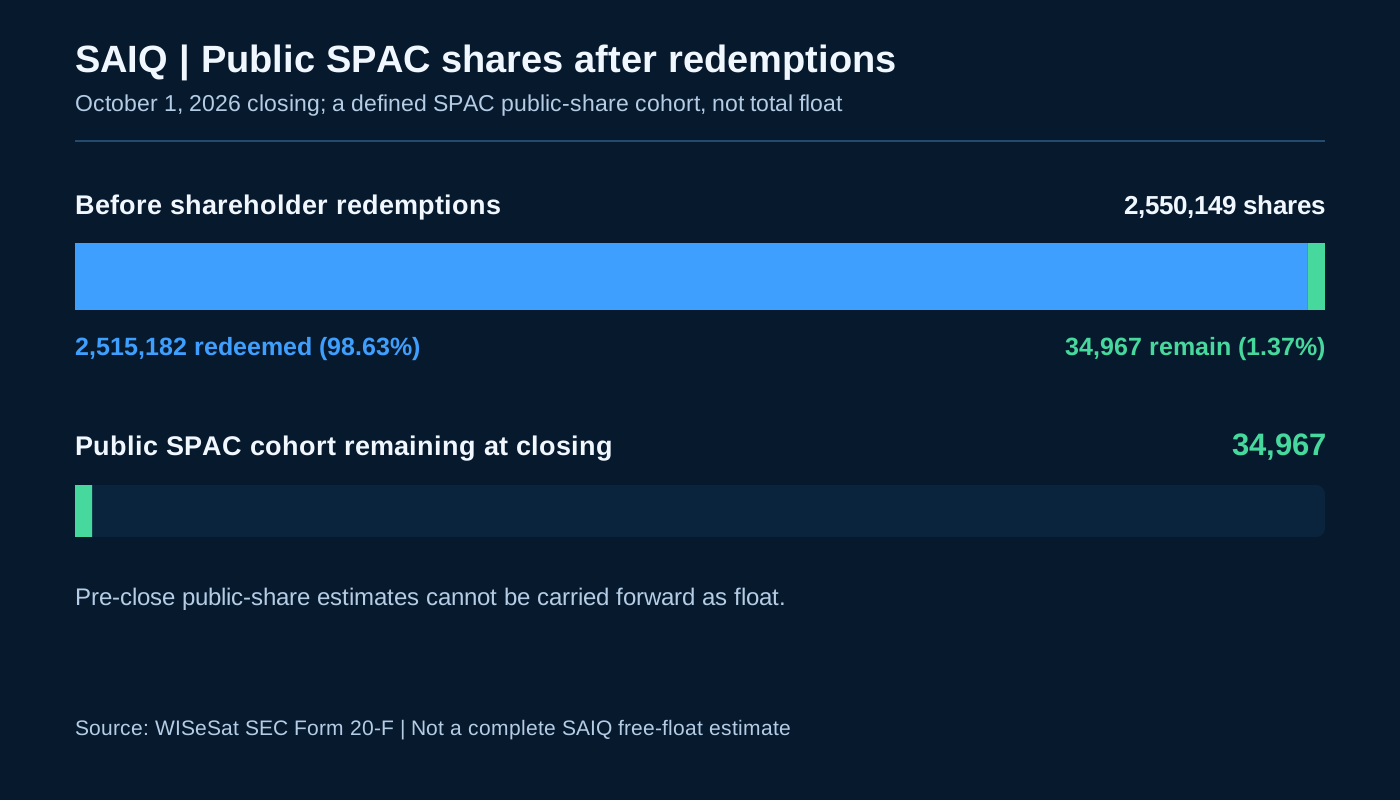
| Public SPAC cohort | Shares | Evidence state |
|---|---|---|
| Public shares before meeting redemptions | 2,550,149 | Pre-closing cohort |
| Shares redeemed at merger vote | 2,515,182 | Completed redemption |
| Public shares remaining | 34,967 | Closing-result remainder |
| Calculated redemption rate | 98.63% | 2,515,182 ÷ 2,550,149 |
An earlier research estimate that treated roughly 2.55 million public shares as the float would have been wrong after the redemptions. But 34,967 is not automatically the full SAIQ float either. The transaction also converted CAC rights and other securities into ordinary shares and involved sponsor shares with different restrictions.
What Actually Existed in SAIQ's Closing Capitalization?
The closing Form 20-F disclosed:
| Closing category | Shares |
|---|---|
| Ordinary shares outstanding, October 1 | 16,818,772 |
| Class F shares outstanding, October 1 | 12,997,400 |
| Both classes combined (arithmetic only) | 29,816,172 |
| Exchange consideration to legacy WISeSat sellers: ordinary | 13,002,600 |
| Exchange consideration to legacy WISeSat sellers: Class F | 12,997,400 |
| Total seller exchange consideration | 26,000,000 |
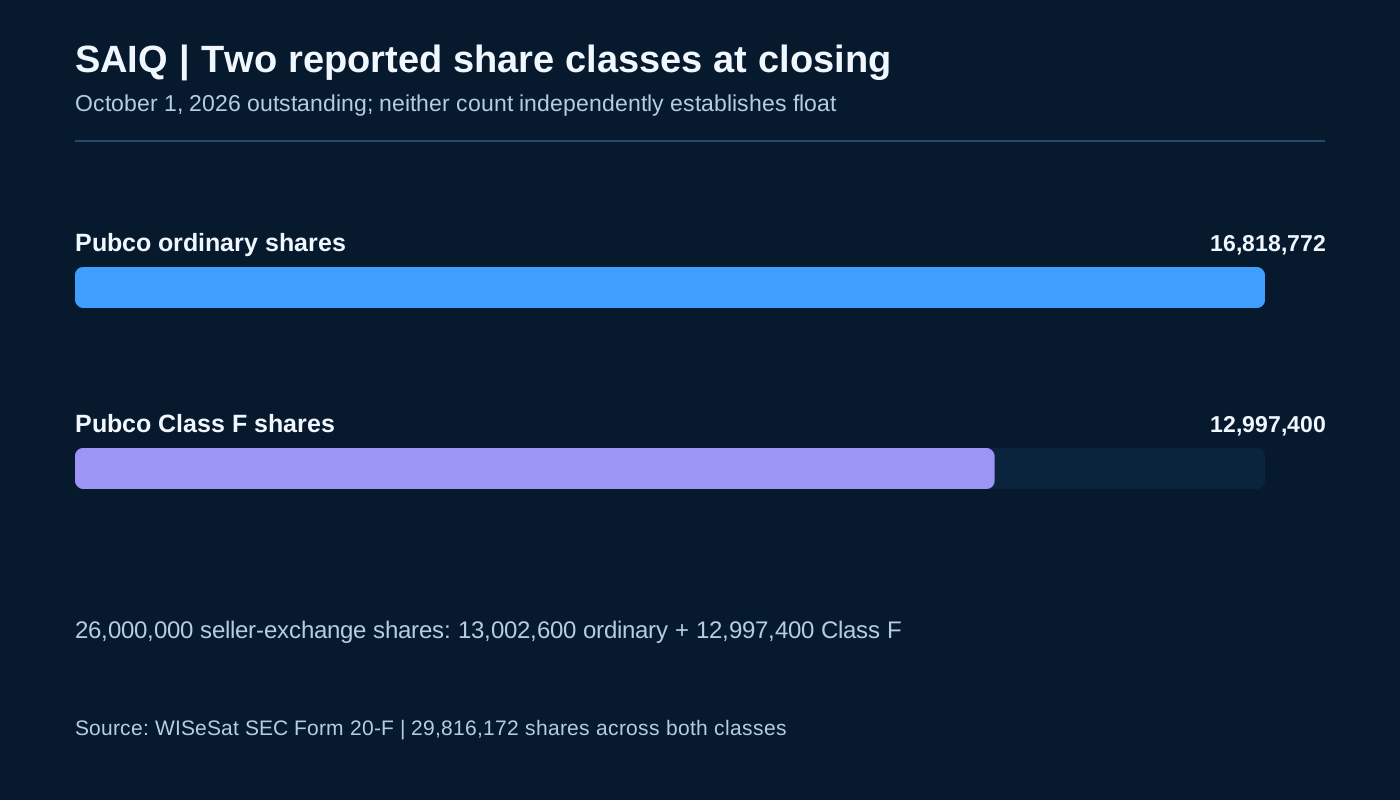
The approximately 13.0 million Class F shares had their own voting/transfer characteristics and were not the Nasdaq-traded ordinary-share line at closing. The prospectus described Pubco Class F as non-transferable at closing except for permitted affiliate transfers; conversion and later legal changes require a separate event analysis. SEC transaction prospectus
The closing also included a $10 million PIPE. An August announcement had estimated 938,086 shares at an assumed price; the October closing report recorded 926,784 ordinary shares actually initially issued at $10.79. Its price-protection provision allowed up to 1,073,216 additional shares under specified later pricing conditions, but those possible future shares were not already issued by virtue of the clause. https://www.sec.gov/Archives/edgar/data/2101411/000121390026107579/ea0307768-20f_wisesat.htm
That is three independent reasons not to equate the biggest share count with free float: redemptions, different security classes, and holder-specific restrictions/contingent rights.
Did All Sponsor Shares Remain Locked?
No. The same closing disclosure explicitly reported both released and restricted sponsor-distribution positions.
- 282,857 CAC ordinary shares held by non-affiliate recipients were released from specified lock-up restrictions at closing.
- 1,072,115 CAC ordinary shares remained subject to the applicable insider-letter lock-up restrictions.
- A separate 109,028 CAC ordinary shares were forfeited at closing and must not be counted as surviving supply from that event.
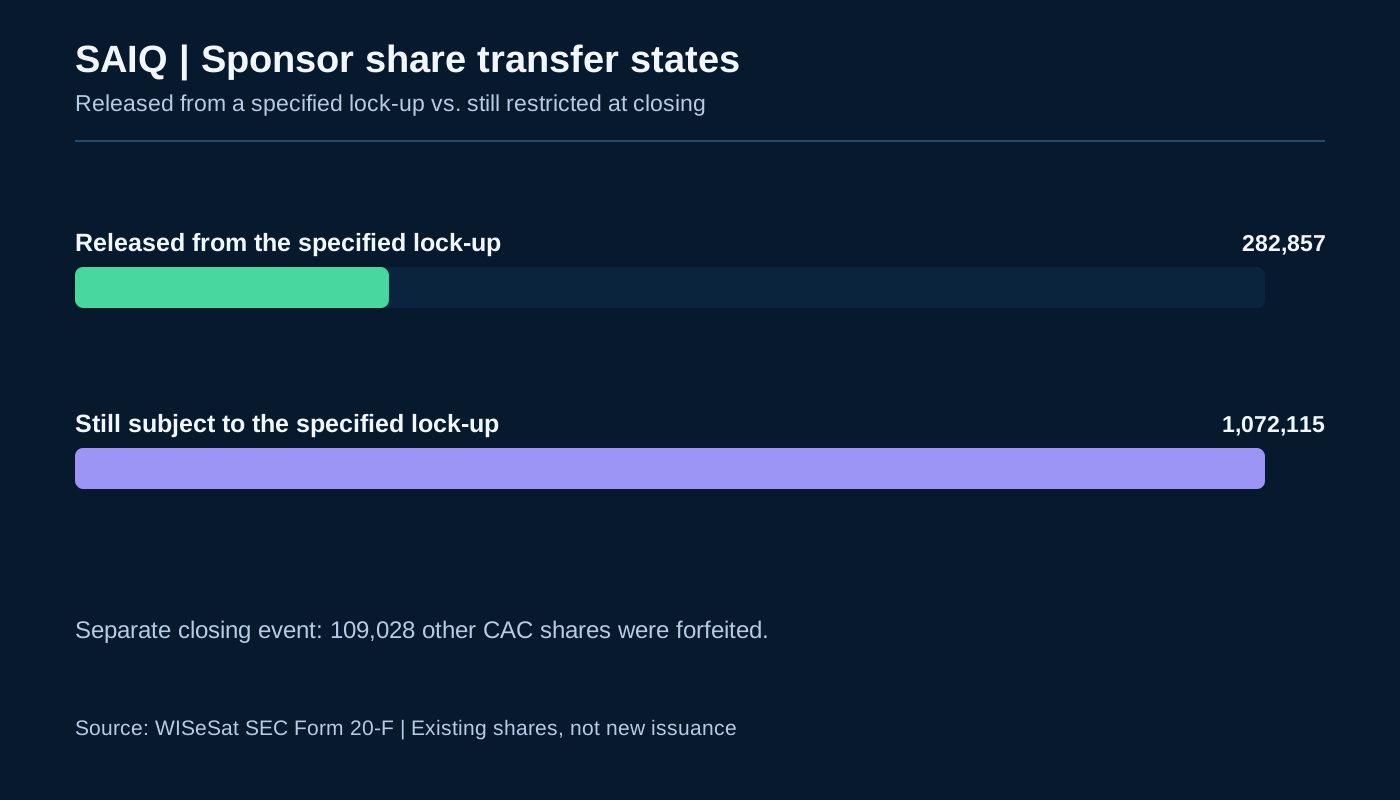
These buckets are not additive to the total ordinary-share count as extra issuance; they describe restrictions on existing shares already reflected in the relevant transaction records. This is why “the sponsor is locked” is not an adequate substitute for checking the actual closing filing.
AMOD: How Did Class A Shares Rise from 4.99 Million to 56.61 Million?
Alpha Modus Holdings announced its PIPE in August and closed it on September 30, 2026, issuing 51,621,560 Class A shares and a separate 51,621,560 warrants at an exercise price of $4.36 per share. The company reported receipt of 3,170 BTC by its subsidiary as purchase consideration. Closing Form 8-K
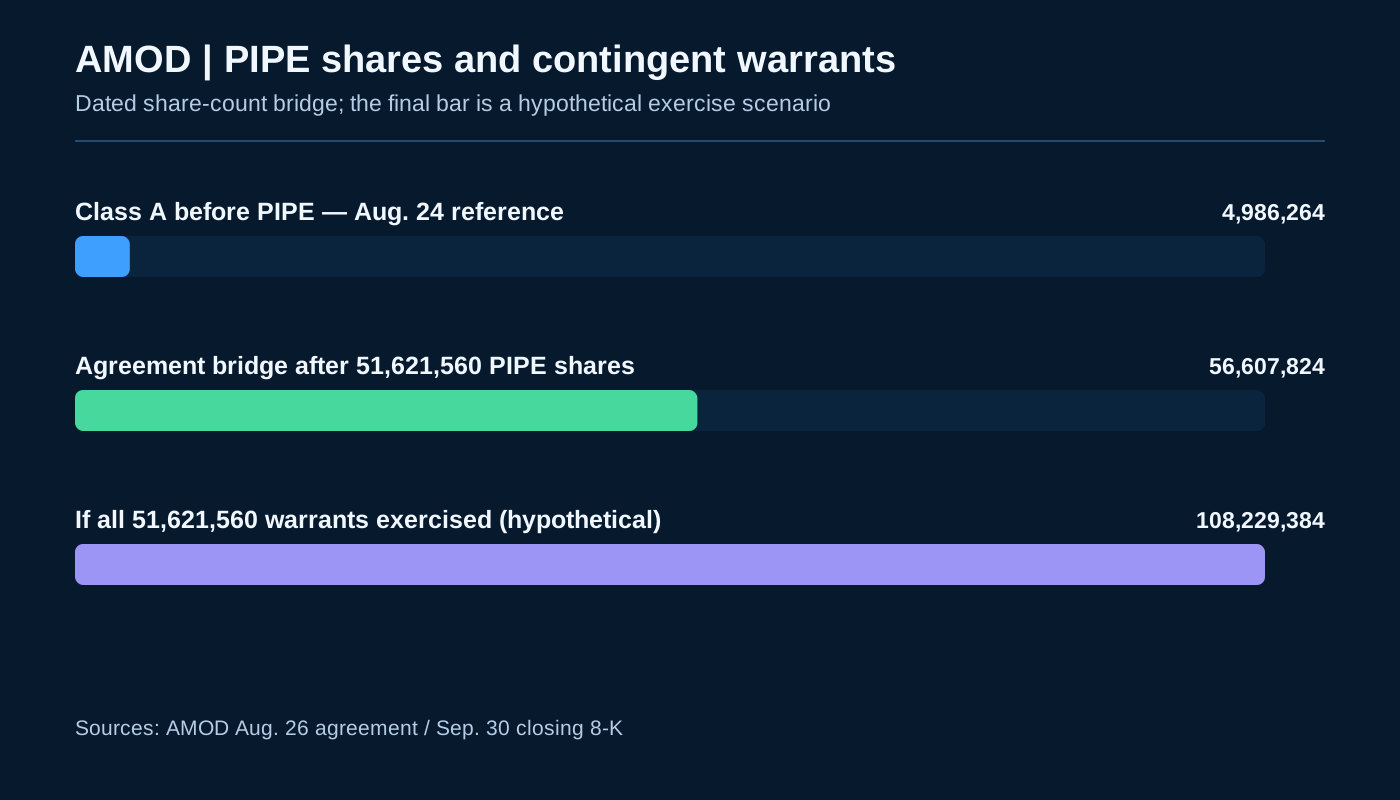
The share-purchase agreement used an August 24 capitalization reference of 4,986,264 outstanding Class A shares. It explicitly showed a post-issuance bridge of 56,607,824 Class A shares: 4,986,264 + 51,621,560. That represents about 11.35× the August 24 basic reference count. It is an agreement's capitalization bridge, which was subject to transfer-agent confirmation and other possible subsequent issuances, not an independently audited minute-by-minute free-float record. SEC purchase agreement, Schedules I–III
| AMOD item | Shares / consideration | Status |
|---|---|---|
| August 24 Class A outstanding reference | 4,986,264 | Dated pre-closing snapshot |
| PIPE Class A shares issued at September 30 close | 51,621,560 | Completed issuance |
| Agreement's post-PIPE Class A bridge | 56,607,824 | Pre-reference + completed issue; qualification applies |
| Additional warrants | 51,621,560 underlying shares | Contingent; exercise required |
| Warrant exercise price | $4.36 | Contractual term |
| BTC consideration delivered | 3,170 BTC | Completed delivery per 8-K |
If all those new warrants were eventually exercised, the mechanical illustrative sum would be 108,229,384 Class A shares (56,607,824 + 51,621,560), ignoring other corporate events and other instruments. That is not the September 30 basic outstanding count and not a claim about how many warrants were subsequently exercised.
The difference matters immediately for a trader. Holding a stock price constant, a stale 4.99-million-share market-cap denominator and a 56.61-million-share denominator imply 11.35× different basic capitalization values. Still, neither number alone reveals tradable float: the PIPE shares' resale eligibility and ownership must be evaluated separately.
OLB: What Does a Resale Registration Actually Put into the Float?
OLB's September 9, 2026 Form S-1 is a useful case because it reports different forms of supply in the same document.
The filing gives 24,032,930 common shares outstanding as of August 31. It also describes up to 2,166,666 shares issuable upon exercise of previously issued warrants, covered for resale by selling stockholders. Their exercise price was $0.78. The filing's 26,199,596 post-offering share scenario assumes full exercise of those warrants. It is not evidence that those shares had all been exercised or resold. SEC Form S-1
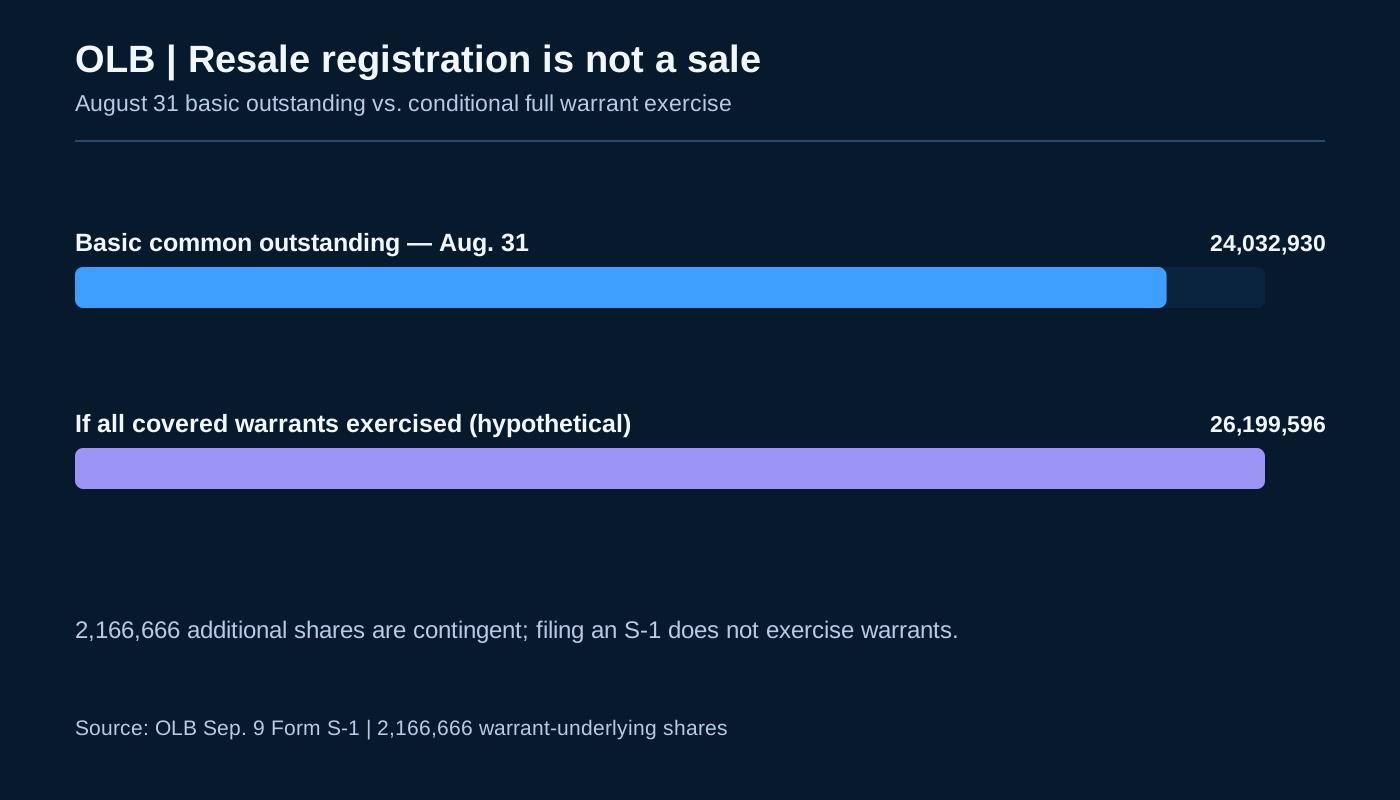
The 2,166,666 underlying shares represented approximately 9.02% of the August 31 basic outstanding share count, as a contingent potential issuance, not a verified 9.02% increase in tradable float.
Why did the S-1 not automatically increase the float? Because registration, warrant exercise, delivery, beneficial ownership, legend removal and an executed market sale are separate states. The preliminary filing specifically cautioned that resale registration did not prove the selling holders would actually sell. It also distinguished no issuer proceeds from resales versus potential issuer proceeds from cash warrant exercise.
What About OLB's 8.265 Million August Shares?
The same S-1 reported 8,265,000 common shares issued in August 2026 at a stated value of $0.29 each. Many were issued in settlement of obligations, and the company identified all of those private-transaction shares as restricted securities under Rule 144. The reported issuance is a completed change in issued supply, but it does not imply an immediate 8.265-million-share addition to unrestricted public float. https://www.sec.gov/Archives/edgar/data/1314196/000118518526003902/olbgroups1090626.htm
The quantity is substantial in the context of the August 31 outstanding-share snapshot, but the correct interpretation requires a holder-level restriction and resale timeline, not an assumption that every recipient immediately sold.
A Useful Outstanding-Share Reconciliation Check
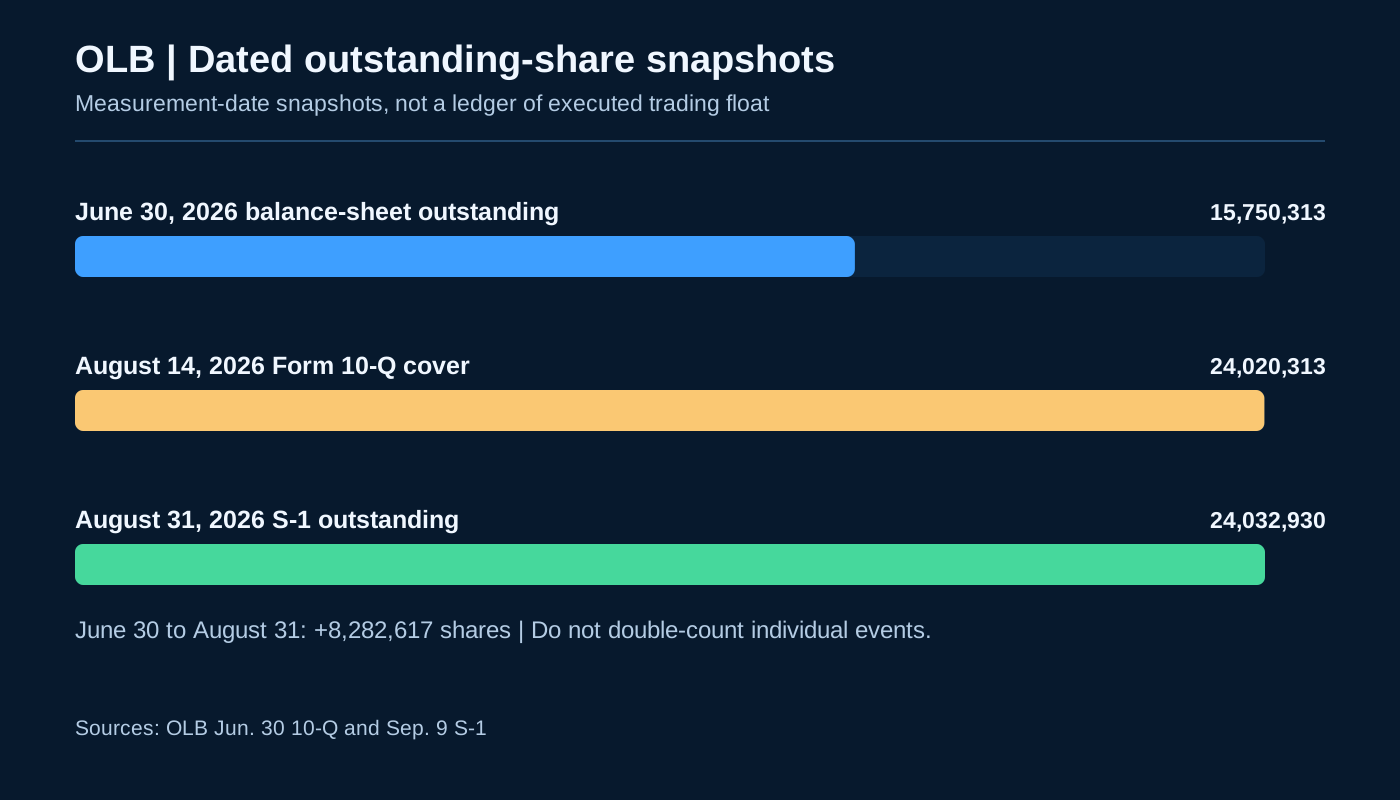
OLB's original June 30 balance sheet reported 15,750,313 shares outstanding (and 15,762,930 shares issued, which is not the same number). The August 14 Form 10-Q cover separately reported 24,020,313 shares outstanding as of August 14. The September S-1 then reported 24,032,930 shares outstanding as of August 31. The numerical change between the June 30 and August 31 outstanding snapshots was 8,282,617 shares.
That change is 17,617 shares larger than the separately described 8,265,000 August private issuance. The proximity is informative; it is not proof that every share of the balance-sheet change came from that one issuance. A complete reconciliation needs the intervening transfer-agent ledger and other issuance, treasury or cancellation events. OLB June 30 Form 10-Q | OLB September S-1
Registered Is Not the Same as Effective, Issued or Sold
A filing's status matters. An S-1 that has been submitted is not the same as one declared effective; neither status guarantees that covered shares have been issued, exercised or sold. Likewise, a contractual requirement to file a future resale registration (as in AMOD) is not itself proof that a later registration became effective or was used.
For quantitative analysis, these states should be tracked separately:
| Event / status | Relevant question | Safe interpretation |
|---|---|---|
| Agreement signed | Is the future transaction merely promised? | Contingent until closing evidence |
| Issuance closed | Were shares delivered? | Increase basic issued/outstanding as applicable; assess class |
| Warrant issued | Is there a right to additional shares? | Potential future supply, not current basic outstanding |
| Warrant exercised | Were underlying shares delivered? | Add only once; reconcile against dated outstanding snapshot |
| Resale filing submitted | Has the issuer requested registration? | Not automatically legally effective or sold |
| Registration effective | Are covered resales permitted, subject to other terms? | Not proof that any holder sold |
| Lock-up expires / waived | Did a contractual transfer restraint end? | Check other securities-law restrictions and holder status |
| Shares sold in market | Is there evidence of actual executed sales? | Market activity, not inferred from registration or authorization |
Why Do These Distinctions Matter for Market Cap, Float Rotation and Dilution Risk?
Basic market capitalization generally uses a price and an appropriate outstanding-share count for the relevant class and date. If a scanner mixes a live price with a pre-financing basic share snapshot, it can materially misstate capitalization. AMOD illustrates a greater than elevenfold difference in the contractual basic share bridge—without any need to forecast price.
Float rotation requires freely tradable float in the denominator, not simply outstanding shares. If the free-float estimate is stale, held securities are misclassified or a warrant is assumed exercised, a seemingly precise rotation statistic can be wrong. The correct solution is not to substitute SAIQ's 34,967 remaining public SPAC shares for all float; that figure is only one identified cohort.
Dilution and supply risk require forward-looking instrument states. Registered-but-unexercised OLB warrants, existing restricted OLB shares, AMOD's new PIPE shares and SAIQ's Class F instruments are different categories. A risk model must preserve those categories rather than summing everything into one guessed 'shares to hit the tape' number.
Short-squeeze narratives are especially sensitive. '26 million shares issued' is not equivalent to '26 million unrestricted shares available to cover a short.' But the reverse claim—'only 34,967 shares can ever trade'—is just as unsupported.
How Should a Scanner Build a Defensible Point-in-Time Float Estimate?
An operational approach is to maintain a dated, source-backed capitalization ledger, not overwrite a single field whenever a new filing appears.
First, identify the exact issuer and security class. A symbol change, SPAC merger or dual-class share structure makes ticker-only joins unsafe.
Second, anchor every figure to its measurement date and distinguish preliminary assumptions, closing facts and later adjusted terms. Confirm redemptions and rights conversion at closing rather than retaining proxy-level public share assumptions.
Third, reconcile actual issued and outstanding shares separately from unexercised warrants, convertible instruments and contingent financing. Avoid double counting a completed issuance already reflected in a newer outstanding snapshot.
Fourth, inspect affiliate/control holders, Rule 144 status, transfer restrictions, lock-ups, waiver dates, and effective resale registrations. For an unresolved holder category, retain uncertainty rather than silently add it to free float.
Fifth, publish a float value only at the confidence supported by the evidence, with the issuer/security identity, as-of timestamp, evidence URL, confidence/status and the unresolved components. A manually checked figure is most valuable when it remains auditable.
Microcap Engine's market-data philosophy is that different share-count concepts remain different fields. An exact outstanding figure can be fully verified while float remains provisional. That is a better research result than presenting a precise but unsupported float.
What We Can and Cannot Conclude from These Three Cases
The numbers here are SEC-filing measurements and transparent arithmetic, not estimates of current intraday free float or evidence of executed market sales. The three issuers are case studies, not a statistically representative sample of microcaps or a measured benchmark of third-party data-vendor accuracy.
Their common lesson is nevertheless concrete: on a single issuer, multiple mutually consistent, materially different share counts can coexist because their states, classes and dates differ. Using one of them in place of another can mislead traders even if the displayed number was copied from a genuine filing.
FAQ
Does a lock-up waiver prove a sale occurred?
No. SAIQ disclosed 282,857 sponsor-distribution shares released from a particular lock-up while 1,072,115 remained restricted by that agreement. Neither category alone proves a completed market sale.
Can the exact float of SAIQ, AMOD or OLB be calculated from these headline figures alone?
No. The cited evidence establishes specific share-class, issuance, redemption, lock-up and warrant states. A defensible unrestricted float also needs holder-level ownership and resale eligibility, the relevant date and the precise traded security class. We do not invent that missing number.
Methodology and Scope Note
This is an original Microcap Engine SEC-document case study prepared October 17, 2026. It uses public SEC submissions relating to WISeSat.Space Holdings Corp. / Columbus Acquisition Corp. (SAIQ), Alpha Modus Holdings, Inc. (AMOD), and The OLB Group, Inc. (OLB). Each figure records the legal/accounting category and measurement date reported in the source; all ratios and differences are simple reproducible arithmetic computed from those filing counts.
These three cases were selected because they illustrate different types of share-supply classification errors, not because they prove a quantitative incidence rate across the market. Figures involving different dates, classes, scenarios or legal states are intentionally not aggregated into a global float estimate. For SAIQ, the 2.55-million-share count describes a pre-redemption public cohort, and the 34,967 closing remainder is not presented as total float. For AMOD, 56,607,824 is the August 24 plus September 30 issuance bridge in the purchase agreement, subject to the agreement's capitalization qualifications. For OLB, resale registration does not certify warrant exercise or executed sales.
Published share states can change with subsequent filings, actual exercises, redemptions, waivers or resale eligibility. The figures are historical as-of facts, not live float estimates, offering advice, short availability data or investment recommendations.
Selected Public References
- SAIQ — SEC Form 20-F, WISeSat.Space October 1 closing capitalization, redemptions, PIPE and sponsor release
- SAIQ — SEC October 2026 closing Form 8-K of Columbus Acquisition
- SAIQ — SEC 2026 Form F-4 proxy/prospectus, Class F exchange and transfer context
- SAIQ — SEC August 6 PIPE announcement with preliminary 938,086-share estimate
- AMOD — SEC September 30 PIPE closing Form 8-K
- AMOD — SEC August 26 securities purchase agreement and capitalization schedules
- OLB — SEC September 9 Form S-1: restricted August issuance, outstanding shares and warrant resale
- OLB — SEC June 30 Form 10-Q: earlier issued/outstanding share snapshot
- SEC — Rule 144: Selling Restricted and Control Securities